Bio | MP3 clips | Schedule | Home | Buy DVD
David Becker Tribune
Read What the Press is Saying:

Photo: Saulkrasti Jazz Festival 2006
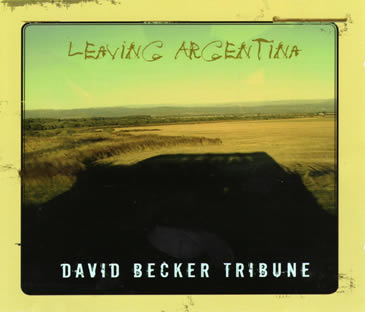
David Becker Tribune, Leaving Argentina

Download at iTunes.
Born in Ohio, USA, David Becker joined stage with artists like
Miles Davis, Chick Corea and The Yellowyackets. He found a
very good teacher in jazz guitar master Joe Diorio and played
at many acclaimed guitar festivals. David Becker now releases
his tenth CD called in his career which last over 20 years. He
teaches guitar worldwide on music schools and released a
guitar book called “Getting Your Improving into Shape”. “Leaving
Argentina” is a Latin American musical adventure through many
countries. On this CD David Becker is assisted by percussionist
Bruce Becker, bassist Bolle Diekmann and bandoneon player
Daria Polonara. This ensemble mixes well with the soft and warm
guitar tones of Becker. The 12 compositions on “Leaving Argentina”
have vary varied setups and moods, which take one on a musical
journey through divers cultures. The guitar techniques of David
Becker show great musical phrasing and melody line building
capabilities. All musicians get plenty of room to demonstrate
their skills on their instruments, while the guitar is never too
dominant, but David's jazz guitar just gives the music great
diversity full of musical skills. An album to discover and enjoy!
Henk te Veldhuis
Bridge Guitar Reviews
© 2007
Jazziz Review:
Leaving Argentina
On Leaving Argentina, veteran guitarist David Becker captures the rich ambiance of faraway places like Patagonia, Buenos Aires, Cordoba and La Plata as well as inspiring sights like the Andes mountains. “It’s basically a record that came about from going to Argentina a lot,” says the accomplished six-stringer and leader of the flexible and highly interactive trio Tribune. “I’ve been there five or six times in the last two years and just started writing a bunch of music that was inspired by being there.”
Accompanied by the flexible rhythm tandem of brother Bruce on drums and Bolle Diekmann on fretless electric bass and upright acoustic bass, Becker once again distinguishes himself as a talent worthy of wider recognition on the strength of this potent, eclectic outing, a followup to Tribune’s 2004 offering, Where’s Henning?
“This is actually sort of a jubilee for me and Bruce,” says the guitarist who shuttles back and forth between homes in Los Angeles and Wuppertal, Germany. “It’s the tenth album we’ve done together in 20 years. I think it has elements of almost everything that we’ve touched on over the years, and I think it’s a natural progression to where we’re at right now musically.”
Sessions for Leaving Argentina were held in three cities -- Wuppertal, North Hollywood and La Plata. Becker brings his inimitable warm tone, fluid linear concept and varied harmonic palette to bear on all the material here, further establishing his place in the post-Metheny guitar world. “I’ve always been a fan of the guitar trio,” he says. “And for me it’s about trying to make the trio have a high degree of interplay while also being able to get away from the standard jazz guitar trio sound. One of the things that I’m most proud of is that people often say it’s a bigger sound that we get. I think that has to do with the arrangements and particularly the musical relationship that Bruce and I have now going on more than 20 years.”
Indeed, the brothers Becker have forged an uncanny chemistry over that time and they are aided immeasurably on Leaving Argentina by the stellar German bassist Bolle Diekmann, who reveals a decided Jaco Pastorius influence on several numbers, including his lyrical fretless electric bass showcase, “Cordoba.” Says Tribune’s leader, “Bolle’s great. He’s definitely a big Jaco fan but he likes a lot of other bassists too. He’s one of the most musical guys I’ve ever played with, and one of the nicest too. I’ve known him for a long time. We’ve played together a great deal and he’s just a great addition to the trio. He fits in very well with what we’re all about. The musical thing that he likes definitely connects in some way with what Bruce and I like.”
Certain tunes on Leaving Argentina, like aggressively swinging, highly interactive trio numbers “Cafe Con Leche,” “Rio De La Plata” and the boppish uptempo burner “Racin’ Through The Andes,” may recall Pat Metheny’s groundbreaking Bright Size Life (recorded in 1976 on ECM with kindred spirits Pastorius on bass and Bob Moses on drums). Other Becker originals like the driving opener “El Sueńo De La Arańa Roja,” the authentic tango number “It Takes Two” (with special guest bandoneon player Dario Polonara) and the dramatic Native American flavored “Patagonia” combine exotic world music elements with David’s own inherent jazziness for a wholly unique hybrid of styles.
Elsewhere on Leaving Argentina, the guitarist reveals his gentle side on the unaccompanied acoustic guitar number “Mentras Duermes (While You Sleep)” and also on the bittersweet ballad “Hard To Say Goodbye,” which is underscored by Bruce’s sensitive brushwork and Diekmann’s upright bass. “Cordoba” is a brilliant showcase for Diekmann’s fretless virtuosity while Becker’s other brother Ed makes his recording debut on the evocative title track, which was originally conceived as a duet between drums and guitar. The trio also turns in a poignant rendition of Keith Jarrett’s “Memories of Tomorrow” (perhaps the most requested tune from his landmark Koln Concert recording on ECM). And they strike a gently swinging accord on Becker’s sprightly “Waltz For Lavignia,” which the guitarist performs on his Martin acoustic.
“We had played most of these tunes on the road, so we had a chance to let them mature by performing them for audiences. So on our tour of Argentina we had a chance to gauge the response and really refine them a lot before going into the studio later to record them.”
Book/CD: Getting Your Improvising Into Shape
by David Becker, Mel Bay Publications 2005, 64 pages
Reviewed by Lee Prosser
The CD fascinates! Why? Because it has 89 selections that explain musically for the ear what improvising is all about! David Becker excels on the CD. A fine jazz guitarist and recording artist, his style is precise and exact.
An interesting biography of the author is included. As a reference book, this spiral paperback is top-notch and something to rely on for the study of items related to improvising.
Following the introduction are thirteen chapters. Each chapter approaches a different aspect of improvising.
These chapters give reliable information, and it is a hands-on approach for the guitarist. Some of the topics covered include dispersed chord scale, altered dominants, a well-presented section on fragments, augmented triads, connecting shapes with chromatics, and progressions.
There is much to learn from this book on improvising. David Becker shares some great information! For further information, the book lists David Becker's web site as www.davidbeckertribune.com.
Enjoy the fine art of improvising with a master of the medium. Becker is a genuine jazz poet of the guitar, and the leader of the David Becker Tribune, a jazz group that has performed in over fifteen countries.
Additional Information: Check it out @ Amazon.com
ISBN: 0786672773
The Color Of Sound
David Becker / Joe Diorio | Acoustic Music Records
By Budd Kopman
allaboutjazz.com
David Becker’s previous release, Euroland, was a multitracked affair where Becker himself played all the instruments to produce a layered sound that evoked different images through music.
On The Color of Sound, Becker plays duos with his mentor, Joe Diorio. For the most part, they both play standard electric guitar, but Becker throws in some synthesizer, a “tabla” guitar (a guitar with a playing card woven between the strings, plus an acoustic pickup to produce a pitched percussive sound), and a nine-string acoustic guitar (an open-tuned acoustic twelve-string with only nine strings). The two players perform live on the recording, except for some overdubbing of strings on “The Color of Sound” and “In A Minute,” the sitar sound on “Reflections Of India,” and brushes by Bruce Becker on the intro “Blues For Brother Bru.”
In terms of actual guitar sound, the two players are similar, using “hot” pickups with a bit of drive and reverb that allows one to hear the pick touch the string. Stylistically Becker and Diorio are clearly related, as expected, and their music has an abstract quality marked by unique chord voicings and lines that are often miles away from standard boppish guitar.
In the arrangements, Becker and Diorio have taken great care to maintain a distance from each other, so as to always present a clear picture to the listener. They stay out of each other's way and use different parts of the guitar’s range. Also, Becker keeps to the left channel and Diorio to the right.
The tracks include a very nice mix of standards, Becker compositions, and extemporaneous compositions—a bit of something for everyone. On the standards, the emphasis is many times on the give and take of ideas, rather than merely trading places soloing and comping, thus providing much fascinating listening. The soloing does allow the listener to get a glimpse into each player’s mind as they constantly flirt with the melody as well as the changes.
Becker states that the compositions he brought were written with Diorio in mind. “The Color of Sound” is a beautiful ballad, full of emotion, while “Waltz for Lavignia” has fun with the 3/4 time as it dances and swings.
On the five fully improvised tracks the degree of musical ESP can be heard, along with the most “modern” playing and stretching out. On these tracks, Becker and Diorio embark on a number of musical expeditions into different colors of sound and manage to create coherent, albeit abstract music that is a joy to listen to. The Color of Sound is a very fine record that should appeal to more than just guitarists. Becker and Diorio clearly had fun in the studio, and the fact that Becker could finally record with his mentor inspired him greatly. If you don't know these players, this release might make you look into their catalogues.
Dave Becker
Inspired
Artist Interview by: Fred Gerantab
JazzReview.com July 2004
For over 20 years, guitarist/composer David Becker has continued to define himself as one of the best and most unique voices in contemporary jazz guitar. Combining diverse influences and a passion for the new and different, Becker's latest CD "Where's Henning?" reflects his gifts as a player and composer, and his ability to play for the present while always keeping an eye on the past and future.
Joined by his brother and longtime collaborator, drummer Bruce Becker and bassist Tom Lilly, Where's Henning follows the trio into the studio for an impromptu recording session. Selected from over 6 hours of music taken from these sessions, the CD combines unique originals and some well-known standards for what is undoubtedly a great, solid jazz record.
We spoke with David about the process of making the CD, his dual existence in both the U.S. and Germany, and what keeps him going to make better music each day.
JazzReview: Tell me a bit about the process of putting together Where's Henning?
David Becker: That's a good question. We didn't really know it was going to be a record, truthfully. The idea was just to go in and play, and see what would come out. I think a lot of the records we have made were more calculated in terms of composition, which I wanted to do, but we haven't done one that was just about going in and playing. My brother and I figured we'd go in, try and see what we could do with that idea - we didn't even listen to anything we recorded, until it was all finished. A lot of the tunes on there were either 1st take or 2nd take.
We kind of sat on it for about 6 months before we listened back to everything, and the only thing I had heard was a rough mix of Footprints and another tune I took on a CD that we listened to when we got back from Europe. I sat down and though, 'what are we going to do with it?', and started contacting some labels and that was what took place.
JazzReview: When was this recorded, by the way?
David Becker: It was 3 different days in L.A., in November last year and then I came back a couple of months later after being in Europe and we did about a half day, like a few hours, and that was when we got Green Dolphin Street, That Man's a Legend, and I Could Write A Book.
JazzReview: I assume these were studio, not live?
David Becker: All studio, one was a home studio of an engineer friend of Tom Willy, and the second was done at a studio owned by a guy who is partners with Steve Lukather [guitarist, of Toto fame], which had this great Neve console. This was the console they took from the studio in England that did [Pink Floyd's ] Dark Side of The Moon.
We had worked there before, and we ended up mixing the whole record there, and even though he's not really a jazz guy, he did an amazing job. We had 6 hours of music, so I flew straight to LA from Europe, got right off the plane and needed to listen to CDs of all these takes, and the 3 of us picked out what we thought should go on the record. There are some tunes like The Monkey, which we had 5 versions of. All of them were very different, but we chose what we thought the best representation was.
JazzReview: Having done all of the record in the studio, how did you manage to keep the sound as "live" as possible, which is what I know you were probably going for? Being a musician myself, I know it can be difficult to achieve in a very controlled recording environment.
David Becker: Well, it's funny because we did a thing, a Sirius Satellite Radio today in their studio, which is basically like trying to play live. When you have headphones on and you're trying to make a record, it's a different mindset. The red light is on, but in our case, we just played. We didn't really care what happened. We were just like, "Let's give it a go and play." The first day was a long day, like 12 hours. By the end of the night, we were all exhausted. I said to Bruce [Becker], “Let's just go and do this one new one, and see what happens.” That resulted in As We Speak, I think because we really didn't think too much about it. It kept the vibe alive.
JazzReview: When you take a tune like a Footprints, or any frequently covered standard, the idea is always to give it your own spin and keep it fresh. Do you have a formula for tackling songs like that, or do you just sit down and go and see what comes out?
David Becker: It's a hybrid, really. In a case of Footprints, which I've been playing for over 10 years, you really play the tune enough where you can more naturally bend it the way you want. With Green Dolphin Street, until I really got to know it better, I didn't feel comfortable doing much with it. But we just took it and played it, and that was first take for us.
I Could Write A Book I had never played before, and other than working on a little chord melody idea, I didn't know what we were going to do with it arrangement-wise. I think Todd was even reading it out of the Real Book. One of the reasons I had been waiting so long to put this record together was I just didn't want to do another clinical version of All Blues, what one of my German students calls “conservatory jazz." If there's a fresh touch to it, it's because we play with no borders.
We do what we can while trying to keep respectful of the original composers, and so far the response has been pretty positive.
JazzReview: I guess being an educator you hold a lot of responsibility; When you sit down with your students, how do you get around that "conservatory jazz" stigma and show them the difference between real creativity and playing vs. “mathematics?”
David Becker: My brother and I were very fortunate having grown up with many different styles of music and languages. And, we had Art Blakey next to Chick Corea, next to Buddy Rich, next to Ralph Towner. It was never a situation where we were just looking to study on, period. It's also important to find your own voice, which takes a lot of soul searching, a lot of research into understanding the idioms enough that you can work around them. However, one thing is certain; the roots are always the same and you can't deny them.
I always encourage my students to go back and learn the history, to see the origins of all of these things that continue to influence the style to date, regardless of how much its evolved. It's easy for a student to go and pick up a video of Mike Stern, or of John Scofield, and kinda learn to do that. There are so many mediums for learning that you can kind of quickly learn to cop a style or mimic something, but not really get the depth of it.
There are a lot of 22-25-year olds I know in Germany who can play and sound kind of like Jim Hall, but there is none of the spark that you find with someone who is experimenting and trying to find their own voice.
Joe DiOrio didn't have a theme. He just said to play what's inside you. With all due respect to guys like Stern, Scofield and Metheny, I would never encourage my students to listen to them and try to play like them, ‘cause you can’t do it. You can learn from them, but you can see, 'oh they got this from Wes, or Jim Hall, or Miles' and start to put it together yourself. There are many guys out there who can play like Wes, and you hear them play with their thumb doing the octave thing. And it's nice, but it's like listening to Rich Little do his impression of Richard Nixon.
JazzReview: I want to divert for a second to your development, how your influences have shaped your sound and your own self-exploration that has led to who you are as a player now. You mentioned you had a great mix of influences, in terms of stuff outside the genre, like rock or pop, is there anything you 'd like to cite?
David Becker: Oh yeah, I remember the first record my father let my brother [Bruce] buy was a Glen Campbell record, and stuff like Beatles and Monkees’ records… most of the Motown stuff of the day. One of the first records I bought when I was 10 was from a group called El Chicano. They did this version of Leaving Toronto, which was a big hit. They did some of these really Latin-influenced tunes, and their guitar player was a huge Wes Montgomery fan, you could really hear it. They were a great LA band that had a couple of hits, but that was cool stuff. I didn't think about it at 10. There was a band called Greek, the Norwegian composer when I was five, and of course rock 'n roll came in. I was a big fan of Bad Company and Led Zeppelin, and of these bands of that time.
Led Zeppelin for me was an interesting thing too because I can really appreciate them now. They weren't just a rock band, but a band with all of these influences. If you look at some of the live DVD stuff from Zep, John Bonham is playing some of these Max Roach grooves that Bruce plays on Footprints.
You can translate that into an understanding of what I wanted to do; to be a musician you have to be open to all things. You can't just listen to a certain period and understand what's going on.
JazzReview: When you listened back to this record, either for the first time or when it was finally mixed and mastered and ready to go, what's the first thing that comes to you mind? Do you hear yourself saying, "This is different than anything that I've done before," or "I hear some things in my playing that I've never heard?”
David Becker: Well, yeah, we're definitely older. Bruce and I have been doing this now for 20 years. I definitely hear the development in my playing, and certainly in how Bruce and I interact. It inspires me to keep going and trying to tap into being a better player. One thing Joe Diorio told me was that you don't get to the good stuff until you're past 40, or 50. I'm 42 now, and looking forward to another 25-30 years of developing my own playing. You look into it by saying, “What is it that I do,” and “How do I perceive this?” Ultimately, it's about trying to always be a good student of music.
JazzReview: Did you sit down and initially know that this was the type of record we were going to do?
David Becker: We really didn't. My brother and I were sitting down rehearsing with Tom Lilly for a gig of standards we were going to do, and we were like, “Hey this sounds pretty cool, be great if we had a recorder going.” I asked the guys if they wanted to go into the studi, and do a couple of days, and they were very into it. There were actually lots of different types of tunes we did that didn't make it on there, mostly because they didn't fit in context of what the rest of the songs sounded like. But we really didn't sit down and say, “It has to be this kind of record.”
JazzReview: What are some of the things that inspire you to play, to write, on any level, not just musical inspiration? I've asked this question many times, and the answer always varies greatly, from art and family to travel. You are very well traveled, I would imagine that could be a big part of it.
David Becker: It's a couple of things. One of the things that keeps me going as a player is that I love to play, and when I have the time in between teaching and traveling I try and just play and learn new tunes. As far as writing is concerned, I am definitely inspired by being in different places, hearing different languages. I might be sitting at the North Sea, and just look at the sea and get inspired. Some guys need to get inspired by being in the mountains, but I think I just think about musical ideas. There are so many things out there that I think I have enough ammunition to keep going.
JazzReview: In conclusion, as someone who's had a long career, what is some advice you would always give young players to develop their careers and to keep going?
David Becker: Most importantly, stay focused. As long as you have the hunger to learn, you will continue to move ahead and find inspiration.
David Becker & Joe Diorio, The Color of Sound, 2005
Acoustic Music Records
Two jazz virtuosi meet on this album. David Becker covers both modern
and traditional styles. Joe Diorio has always been an inspiration for many
jazz guitarists. Their collaboration on this album reflects a touching, intimate
conversation on a celebrated musical journey. The repertoire they play is a
mix of standards of composers like Gershwin, Victor Young , Jerome Kern
and own compositions. Both guitarists use different guitars. Diorio prefers
his jazz guitar while Becker uses a tabla guitar, a nine-stringed acoustic
guitar and the synthesizer. This all leads to a brilliant musical interaction
where both players give each other lots of space to improvise as on Victor
Young's Beautiful Love. Waltz for Lavignia by David Becker has an intimate
setting in a enchanting ambiance. Dance Of The Inner City is a true master
piece with percussive elements. How Old Are You? Is a wonderful musical
journey with lots of contrasts, but nevertheless with a renewing modern and
spiritual approach. The Color of Sound composed by David Becker takes
you on a intimate and reflective trip with astonishing sound escapades.
Reflections of India paints that typical oriental atmosphere with expressive
staccato play. This album is a must for any serious jazz enthusiast.
Henk te Veldhuis
Bridge Guitar Reviews
DAVID BECKER, INTERVIEW SPANNING TWO WORLDS AND BRIDGING THE GAP
Interview by Suzi Price, JazzReview.com
Fusion guitarist, David Becker, stays one step ahead
with his new, Tribune, "Germerica" on Silverline Records, a DVD six-channel
surround sound audio, slated for release August 2001. This exciting new
technology produced and marketed by the 5.1 Entertainment Group and DVD
International offers the ultimate sound and visual experience, so David's new
Tribune collection will surely enrich the language of jazz. Enriching
that language, David offers a diverse variety of sounds on this CD, gathering
all elements into this creative exploration. It's an introspective album, one
that gives you chance for thought and contemplation. It speaks of experiences,
moods and colors, and brings together the old world and new. I'm not speaking
about reinventing jazz standards; rather it's a delightful interplay of West
Coast fusion and old world style. One such selection, "The Truth," is a
mysteriously beautiful piece that could be the title song for a hit movie. In
it, I hear Bach-ish bass lines, a modern day drum beat, old world Spanish
flavor (in some of David's solo guitar work), and a synthesized violin and
vocal inlay that combine to create a haunting improvisation. Mixing it up with
a touch of blues and a tinge of swing, David's new DVD is worth adding to your
collection. David is extremely busy these days traveling between
Germany and Los Angeles and appearing throughout Europe this summer. I was
fortunate to capture three hours of his time for an in-depth, informative look
into his life and music. JazzReview.com: David, you live in
Germany. With your busy schedule it must be hectic traveling so much.
David Becker: "I've been in Germany since 1994. I live in Wuppertal
near Dusseldorf, about an hour from Belgium. I have been shuffling back and
forth because I was teaching at USC (University of Southern California) in the
studio jazz department. The last few years have been crazy. Every six weeks I'm
on a plane going here and there. Basically, I'm homeless!"
JazzReview.com: It must give you a real sense of accomplishment to
have your new release on DVD surround sound. Your selections all seem to flow
so easily. How did the project come together? David Becker: "I
can sit down and play all these (jazz standards) tunes and I feel very
comfortable with my guitar playing level now. I've definitely grown in the past
ten years and feel there is a new horizon coming to me. But, it's always going
to be about the music. When I sat down to write this record, I really had to
think heavily about what I wanted to do. What did I want to address? There were
certain elements of music I had been playing or hearing that I wanted to put
down on tape. So, that's how I picked what I did for the project. I guess it
works because I wanted to play drums on some of it. I've never done that on a
record. We took this one piece that is sort of a ballad. It has a real swing
style, but I was thinking I wanted to do this in kind of a 12/8 pattern and it
just worked. That was a situation where it added something to the piece of
music. Someone could have said, 'Well, you could swing with brushes,' but it
didn't need it. At that moment it just felt right." JazzReview.com:
From where do you draw your inspiration for writing a song?
David Becker: "There are elements of rock and roll from my past that
have to come through in some capacity. I can't say that I've never heard rock
and roll. I'm 39, what am I going to do, bury my head? I mean, I love Wes
Montgomery and always felt a pull to jazz music, even when I was twelve, but I
use all those elements." JazzReview.com: So, how did you get
started? David Becker: "I used to play trumpet in junior high
school and had a music teacher who introduced me to Charlie Parker, Miles, etc.
He was an old jazz trombone player who taught there at Woodland Hills
(California). He got me to play in the jazz band
simple charts, but enough
that I learned about Lester Young, Mingus, etc. I even played Goodbye Pork Pie
Hat. When you are twelve or thirteen, it doesn't mean much 'cause you don't
have any connection to Young or Mingus. But, to know those names at that age
was very important for me. It was his goal, regardless of the level of each
player, to make us sound like a band. Instead of worrying about who was the
best player, he told us to just make it sound good. That was important to me
and I didn't realize the impact it had until later when I started to do my own
music; how you put a band together, how you get that sound."
JazzReview.com: Did you grow up in a musical family?
David Becker: "My mother can play piano by ear
and we always had classical music in the house. So when I was four or five, I
was hearing Mozart and Brahms. It wasn't until I was about six that I heard my
first pop and rock records. I remember the first record that my father allowed
my brother to buy. It was like the Four Seasons or something really obscure. My
brother used to buy 45s of the Monkees and Beatles. When I look back to then,
there was a lot going on in the pop culture that was very interesting in terms
of development. Even the old stuff from Motown-that was some serious music.
Most of them were old jazz musicians. Then of course later, there was Zeppelin
and Hendricks. We bought a wide variety of things. When I think about it, it
sure was some heavy stuff for an eight-year old to be listening to, but I liked
it. I remember buying an instrumental by a Los Angeles group, El Chicano. The
guitar player seemed to be influenced by Wes Montgomery. I didn't know it at
the time, but I hear that now." JazzReview.com: Your older
brother is a drummer and you have played and toured together a lot. You must
have shared quite a bit musically growing up together. David
Becker: "My brother started buying Louie Belson and Buddy Rich records when
we were young. In those days my brother was playing drums in junior high
school. Belson and Rich were an influence to every drummer. There was nobody
else. I remember taking trumpet and guitar lessons at this music store in
Canoga Park in the seventies. A guy who was friends with Louie Belson owned it.
Louie Belson had a brother, Henry, who used to teach drums there. So, Louie
would come in and sometimes bring his band to play there. Even Buddy Rich and
Terry Gibbs would play there. Terry owned a piece of the music store too. All
these New York guys would come and hang out there
Mel, the drummer with
the Benny Goodman band, and Freddie Grubber too. These guys had an indirect
influence on my brother and me, more than we realized then."
JazzReview.com: What musicians influenced your style?
David Becker: "I remember seeing Stanley Clarke and Dixie Dregs when
I was 16. That was one heck of an underrated, eclectic band. I met Steve later
and told him that. They did some amazing things. Then, I heard Pat Metheny. At
first I wasn't that knocked out about him, but I thought that I should go see
him in concert. That was in '79 with Danny Gottleib and Mark Egan. The thing
that floored me when seeing them in concert was they were so together as a
band. For four guys, they had this dynamic, incredible energy. Prior to that, I
discovered Wes Montgomery and used to go see guys like Milt Jackson in L.A. I
grabbed as much as I could. I had all the Miles, Coltrane, and Jazz Messenger
stuff in my collection. In my twenties, it was jazz or nothing. It might have
been a little narrow-minded of me, but I think you have to go through all that
to discover yourself." JazzReview.com: What started you playing
guitar and down the path to fusion? David Becker: "Somehow I
never thought about styles. If I liked it, that was it. I started playing
guitar in high school. I was disappointed with the high school music program,
so I thought, 'I'm going to quit playing the trumpet and learn guitar.' I
wanted to play rock and roll. That was what my brother was playing in the
garage. We played Zeppelin, Bad Company, etc. After 6-8 months playing guitar I
heard Grant Green on the radio. I thought, 'Wow, that's really cool-I'd like to
play like that.' I hadn't heard a lot of guitar and with most of the big band
stuff I had listened to, the guitar was so buried. So, I started to investigate
contemporary stuff like Stanley Clarke, Chic Corea and Al DiMeola. It was
pretty exciting. It was high-level music at the time."
JazzReview.com: Your brother and you started out together. How did
that all come about and how did you end up living in Germany? David
Becker: "When I was just 22, my brother and I put this band together. We
were going to do a tour. We didn't have a record out, just a little tape
recording. This was when I was living in Los Angeles. I had gone back and forth
to
Germany when I was 19 and played some basement clubs.
That is were I met Joe Diorio. After graduation, I didn't want to stay in L.A.
It didn't really represent the musical things that I liked. I wasn't into going
to the Baked Potato, etc. It didn't inspire me. I was listening to Eberhard
Weber and it just drew me to Germany. My mom was from the Netherlands and I had
been back and forth to Europe since I was a kid. I have relatives there and I
just decided to go. The European scene really grabbed me and I played with
other jazz musicians there. After that, I started making my own music. I made a
demo tape and ran all over the place trying to get a record company. I actually
found a few people who liked what I was doing. There was a guy from Polydor in
Holland who was interested and I went to his office. He thought my stuff was
very good and that I should make a record. Ultimately, it didn't work out, but
I continued to go to Europe for a couple of weeks each year to hang out, play
if I could, and send tapes out. Ironically when back in L.A., we were playing
monthly at this club in Venice Beach called The Comeback Inn. The owner loved
our music and was organizing a European tour for other musicians. A month
before the tour was to begin, the guy said he couldn't do the tour. Right then
I decided I was going anyway." JazzReview.com: How did you get
gigs in Europe? David Becker: "We lined up a bunch of gigs in
Germany within a small period of time. For Germany, that was unheard of. It
usually takes a long time to organize that. I was just lucky I guess, landing
at the right places at the right time. I got us a gig in Berlin, some in Munich
and Frankfurt. You know, I'd just call a club and say, 'Hi, I'm an American
guitar player with a trio and we want to play your club.' They'd say, 'Yeah, we
have a night open on the 16th, so ok, you can play for the door.' It was nice.
We had this little EP that was produced with a couple of guys from Warner
Bros., but it never came out. It was a live trio album, five cuts
and at
the gig in Berlin, they played it on the radio. In those days, the wall was
still up so it was a pretty small community. We got some press too. I could
afford to buy a new van because the dollar was so high there and we just drove
around Europe playing. Our gig in Berlin was amazing. We showed up at
this place, set up, and there were only about three people in the audience. We
thought, 'Oh well, let's just play and have some fun.' After we started playing
the first tune, pretty soon the place was packed. We didn't see anyone when we
set up. I guess they were all upstairs. They were a great, great audience. At
the time, I was working with the Martin Guitar Company and doing demos for them
at tradeshows. I was playing some jazz stuff with the guitar and Chris Martin
said, 'Great, I like that, go do it!' We started doing clinics and I got more
exposure-a few articles in magazines, etc. I have a lot of
endorsements and work with the Bose Speaker Company near Amsterdam. In 1992,
they opened up a few offices in Russia. I told them I'd love to do some clinics
there. Next thing I knew I was on a plane! I thought it was just going to be a
few clinics... going to a store and talking about the speakers. We did six
nights
three in St. Petersburg in Leningrad and three in Moscow. Our
concerts were in these huge theaters and I got to play with David Goloshokin.
He is one of the most popular jazz players there. He plays trumpet and runs
this theater in St. Petersburg called the Jazz Philharmonie. We did one night
on television with him to an audience of two hundred million people.
Unbelievable! It's funny, but four years prior to that, I had done an interview
in Washington D.C. at the State Department on Voice of America. The guy asked
me, 'Have you ever thought of going to the Soviet Union?' I said, 'I'd love to
because I have a song called Siberian Express and my grandfather had been all
through there.' Then four years later, I was playing there. What a great
experience that was." JazzReview.com: Going to Europe and
making your own way sure was a bold move, David. I guess it all worked out
well, leading to the release of your first album. David Becker:
"When we got back from Europe, we ended up in Pennsylvania. We just called
around and started booking colleges. Since we had just played Europe, they were
really receptive. Colleges put us in every conceivable room you could imagine.
We didn't get a lot of money, but enough that we could get to the next gig.
They would put us up, feed us, etc. It was very funny. We would end up playing
in a college lunchroom with some guy right in front of us eating spaghetti. We
played every college we could all through the area, even up through Vermont. We
headed west and within three months we were doing non-stop gigs. Sometimes we
did two gigs a day. I would love to have a tour schedule like that today.
Anyway, we were out on the road getting exposure and we had our little EP we
could take to local campus radio stations. Ultimately, this led me to recording
my first album and then I were picked up by MCA. I did two albums with MCA,
then moved onto another label and did two more albums."
JazzReview.com: What was your first big gig and tour?
David Becker: "My first big jazz festival was opening up for Miles
Davis and Chick Corea in Long Beach (California). It was Jack DeJohnette's
band, Steps Ahead. I played my fifteen minutes of fame, then Chick performed,
then Miles. I got that gig last minute too. This guy called and said, 'You're
gonna open for Miles next week.' I said okay and quickly started practicing my
solo stuff. Naturally I was very nervous. It was raining the day of the concert
and everything was chaotic, but when I got onstage and played, the audience was
very receptive. It was so great. Later we toured up and down the west
coast and basically opened for everybody we could-the Yellowjackets, Spyro
Gyra, George Howard. We knew them from MCA. In fact, I did a tour with Spyro in
Germany a few years ago. We were their special guests for the whole tour. They
are a great bunch of guys and we had so much fun together. We toured all over
the place between 1981-91, even in Mexico. That was a weird gig. I never knew
you could go to Mexico and have any fans there, but our performances were sold
out.' JazzReview.com: Along with cutting this new DVD release,
what have you been doing in Europe lately? David Becker: "I
recently worked with a trio in England. I worked with them before and I'm
considering recording with them. Their rhythm section is a generation older
than I am. The drummer is Trevor Tomkins; the bass player is Jeff Clyne. They
are well known and have worked with everyone, but I didn't play with them
because of that. We had a musical communication. We got on stage and everything
just jelled. It was a great feeling. I've played with my brother for years and
I've always been selective about drummers. Suddenly with Trevor, I could do
whatever I wanted to and he was right there. Other times he backed off and Jeff
and I did our thing. Ultimately, it's that chemistry and how the playing
affects the music and the audience. I was in Antwerp last weekend. It
was sort of a last minute gig that my brother booked, so I just drove out from
Germany. It wasn't a big gig, mainly for people that knew us. We will probably
play there again next year. I'll either play solo or with Joe Diorio. Joe is my
mentor and we've spent so much time together. I studied with him a little, but
mainly have just hung out with him. We've known each other 20 years. I did a
European tour with Joe about a year and a half ago. He's done a lot of
recording and has been a big influence to Pat Metheny and me. Everybody knows
him. Joe has definitely taken the guitar way into the 21st century
way
before anyone else did. Anyway, we were supposed to do a tour this year, but he
got sick and the doctors wouldn't let him fly. We had to push everything aside.
I did the gig as a trio and it worked out fine, but it would be nice to play
with Joe again. We'll have to see what happens in the next year or two once Joe
gets back on his feet. We will be able to do something again."
JazzReview.com: Where do you think fusion fits into jazz today?
David Becker: "I think the things that Al DiMeola did at that time
in his career were milestones in terms of what he was trying to get across. He
really composed a very percussive sounding music that bridged a gap between
rock and roll and jazz. That opened up the doors for all that screaming, heavy
metal guitar playing that came afterward. McLaughlin was more experimental than
what Weather Report and Larry Coryell with Gary Burton were doing at the time.
It wasn't as slick and refined. When Return to Forever came later in 1976/77,
Romantic Warrior had reached the peak of using recording technology to make
everything sound big, using all those different sounds. It didn't have a future
because I don't think it had a direction. It came to a place and that was it.
If you listen to that stuff today, there is no comparison. Today,
Heavy Weather still sounds good in terms of it being new and innovated, while
Romantic Warrior sounds dated because of the way it was recorded. I think that
was the death of it. It had its place. I mean Chick Corea had a huge
vocabulary of what he could do. He is one of the great jazz players of our
time. He can do anything he wants. At that time, this is what he wanted to
address. For me, it outshines anything he did electrically in the last ten
years. He never became stagnant. At the same time he was doing Return to
Forever, he was out making duet recordings and solos with Herbie Hancock. He
definitely kept his hands on a variety of things. Some of the other players who
came up during that time didn't do that. They stayed with the same thing. Chick
is a genius. He doesn't play electric keyboards anymore, but he doesn't have
to. If you know Chick, at some point you discover Ahmad Jamal."
JazzReview.com: What about the transitions from then to now?
David Becker: "Jazz is always being reinvented, but it always goes
back to the roots of jazz. Certainly there is a whole vocabulary that was
developed and has to be adhered to. It's part of where it all comes from. I had
this conversation with Pat Metheny not long ago. I guess it depends which side
of the music you wish to address. Obviously, there are so many different things
going on." JazzReview.com: You keep control of your creativity
and stay true to your art. Do record companies have an influence on the type of
music you release? David Becker: I have a problem with a lot of
what record companies put out as jazz. I think they try to put out something
that sort of molds a certain period of time, but it doesn't live up to what it
was. It's a mediocre attempt of putting out what has already been done. You are
letting the record companies dictate what's hip and what isn't. It's true. I
look around and see all these things being put out by various record companies.
For my personal taste they are completely unnecessary. They want to take a
player and put him together with somebody, but there isn't anything happening
chemistry-wise. Oh, there is on some records don't get me wrong, but there
tends to be some that you scratch your head and wonder, 'why was this record
put out?' They're trying to substitute for something that has already been
done. For me, it doesn't have any addition. If somebody wants to go with a dual
record, it's perfectly fine with me, but, sometimes they want to put out ten of
them. You know, the covers look a certain way; they sound the same, etc. I
don't think it does any justice to the artist. They aren't giving themselves a
chance to express the music the way they want to. That happened to me at
Impulse when I was with MCA. Guys with Impulse would end up doing
recording dates they didn't feel comfortable doing. The company didn't dictate
'do them,' but rather suggested heavily that they do. The artist feels, 'What
am I suppose to do?' In the end, there is no justification to the music. It
tends to put a bridge or a border around it. Many think this is traditional and
should be done. Others say, 'We should go that route, it sells more.' I think
it's all a bunch of nonsense." JazzReview.com: So, how do you
stay true to your art? David Becker: "You have to do what you
believe and not worry about what other people say. I think we are in a
situation now where so many people are looking to what's going to be more
successful. What is going to sell? Let's face it, anyone who makes a CD and
records his or her music is commercial. If you don't want to sell it, you
should just go sit in a shed, that's fine. I have the same problem with that
stuff as I do with Smooth Jazz. A lot of it sounds like bad, regurgitated
George Benson. George Benson is great. He can sing and play his butt off. He
doesn't have to prove anything. But, a lot of what they call 'smooth jazz' is
stupid. They are just chasing after a certain thing. The thing about my music
is, and I hate this word, it's always had this crossover. Some of it is crossed
over to the contemporary hearing ears. People will say to me, 'Oh that sounds
good, that sounds like'
I don't want to go after that. I would never want
to do an album of songs all sounding like one particular bag. It isn't what I
do. I don't want to have to chase after it. I say, do what you want to do."
JazzReview.com: It's hard to find a good variety of jazz on the
radio nowadays. Many stations play smooth jazz that seems more like a
commercial venture encompassing everything from Phil Collins to Barry White.
This doesn't really reflect the jazz we know to a younger generation does it?
David Becker: "Why let the radio stations start dictating to
you what they think they are supposed to play. The most successful radio
stations I know who promoted jazz music over the years were the ones who held
to an eclectic format. KKGO was a good example of such a station. You would
hear some contemporary sounding artist and then you'd hear Charlie Parker.
People liked that. That is sadly missing on the airwaves today. It's really a
shame. When you go hear jazz artists in concert, they're not going to play this
one particular sound throughout the whole thing. That would be completely
boring. Perhaps my perspective is a little unwarranted to judge since I haven't
really lived in the U.S. for the past eight years, but what I hear on the radio
when I am in Los Angeles or New York is really sad. There are so many good
things they could play, but all you hear is a bunch of junk. They are
second-guessing what the public wants to hear. The public only knows
what they hear. You could take a poll. Demographically, you'd find people are
interested in all kinds of different things. Let them hear that! Allow them the
freedom to choose. At one time, even the rock stations would play the more
progressive sounding jazz, like Chick Corea's thing and the more electrified
sounds. Suddenly it's all about style. That's the problem. Record companies and
radio stations want to give something a name, label it. Doing this, they
segregate themselves as well. It's like a closed community. It's done with
contemporary and traditional jazz as well." JazzReview.com:
What advice do you have for keeping jazz alive and passing its heritage and
appreciation along? David Becker: "I remember something that
Tony Bennett said at the Grammy awards. He said, 'Jazz music and baseball are
the two biggest cultural exports that we have in this country.' We need to
support that idea. I hope more people become aware of that. The media thing is
always going to do what it does, but I believe there is still a community of
people who help to make jazz survive. There has to be a uniting of the jazz
community and we have to stop getting into a fistfight about what jazz music
is. Look at Miles. I don't think anyone ever touched a larger spectrum of music
as he did in his life. It would take someone else five generations to do so. We
can learn from that. We have to push it forward while looking back and support
jazz. That means going out and seeing live music. Don't say oh I'm too
tired
go! There is common ground when you go to a jazz festival
and have a mixture of music. With the media it doesn't exist. Jazz encompasses
so much; you can't just leave out all the bits and pieces. You're not doing it
justice." JazzReview.com: What is your own personal idea of
jazz? David Becker: "For me, jazz is and always will be
improvisation that utilizes this language to communicate something. Regardless
if it's a ballad or complicated improvisational piece, it has to be a part of
the music. Above and beyond that, you can do whatever you want with it. So, if
it has those elements, it's jazz. It's up to the individual to figure out what
they want to say. If you look at my latest DVD, I could talk about
each piece of music and say, 'Well this is the story I want to tell.' Each
piece is going to have a different thing. I could play Stella by Starlight all
night. I'll play that the rest of my life, but I always find new ways to
approach it. When I'm writing pieces of music, I always draw from some place. I
won't always draw from Stella by Starlight. I'll draw from James Brown, Led
Zeppelin, or whatever I listened to as a kid. Today we have a cross-section of
jazz musicians who have much more they can draw from. For instance, when I buy
CDs, I'll go out and buy records from Blue Note that are the real deal, not
something from a guy who plays really well, but is trying to recapture
something
like putting some guy on a recording with Jack DeJohnette. You
can hear he's not comfortable playing with him. It's a great experience for the
guy, but the real idea of communicating is he has to be able to put himself in
an environment where he feels comfortable." JazzReview.com:
What challenges you David? David Becker: "It is always a
good idea to challenge yourself and play with people who are better. But, in
trying to make a musical statement, you need to think about with whom you play
and what you play. It has to flow. Again, the record company wants to have
those big names on the label, except it might be better to play with your own
trio. There has to be that chemistry. I'm not a household word, but my
initial desire as a musician was to have my music reach a wide spectrum of
people. I feel very lucky to have that at this stage in my life because a lot
of guys haven't even had the chance to record anything. It's not about sales.
It's about having the opportunity to put your stuff down. Today, musicians have
a whole new medium with the Internet. A guy can record his own music and market
it without a record company. It is a really cool time in terms of putting your
creativity into something that will reach so many people. That wasn't available
15 years ago. All you need is an audience and you have that on the Internet.
My philosophy is when I sit down, I try to play for the fan inside of
me. That is something Pat Metheny always said
'Trust that voice.' I try
and give people what that fan inside of me is hearing. I never lose sight of
the fact that the audience is an integral part of the music. They give you
something to play off of. I enjoy playing live. There is a certain magic you
get from an audience. It's the best." JazzReview.com: It is
seldom I interview a jazz musician who isn't afraid to tell it like it is, but
David is very passionate about his music and convictions. This speaks well
about the man and his music. It is totally refreshing! We wish David every
success with his new release and I thank him on behalf of JazzReview.com for
giving so much of his time for this personal interview.
Photography by Jos Knaepen
©2001 |